
Active leaks and ceiling stains
We trace the leak path, check penetrations and flashing first, then address shingles, underlayment edges, and decking issues that let water travel.
Serving Havre de Grace, Maryland & surrounding areas
Mon–Sat · 7am–7pm
Stop leaks fast, prevent rot, and get a clear repair plan after a careful roof assessment. Our local crew repairs shingles, flashing, vents, and flat roofing details with durable materials built for Maryland weather.
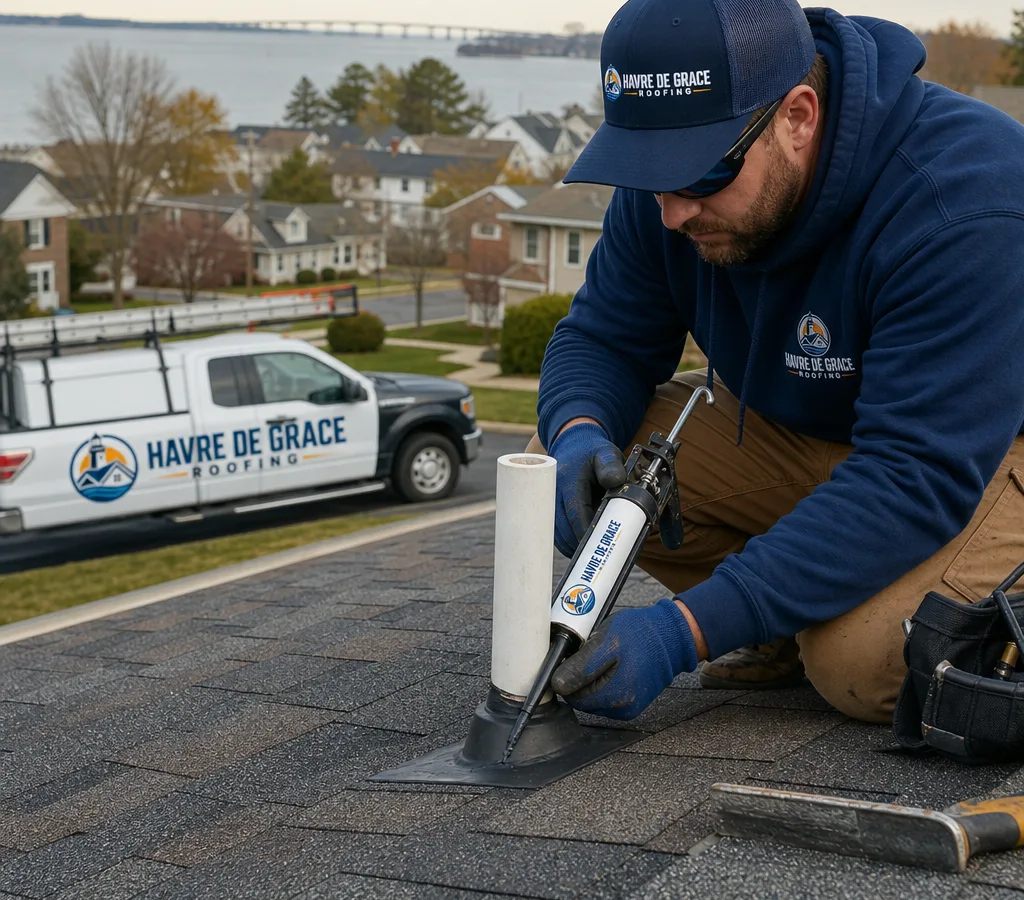
When you search for roof repair Havre de Grace, you usually need two things: the leak stopped quickly and the fix to last. We focus on pinpointing the actual entry point—often not directly above the stain—and repairing the roof system components that failed: shingles, flashing, underlayment edges, pipe boots, valleys, and transitions.
Havre de Grace homes see plenty of wind-driven rain and humid summers, and that combination can expose small weaknesses fast. A single lifted shingle, a popped nail near a ridge, or a tiny flashing gap can send water along the decking until it finds a seam or fastener hole. Our approach is straightforward: inspect, document what we see, explain the options in plain language, and complete repairs that match the roof type and the way water actually moves.
We trace the leak path, check penetrations and flashing first, then address shingles, underlayment edges, and decking issues that let water travel.
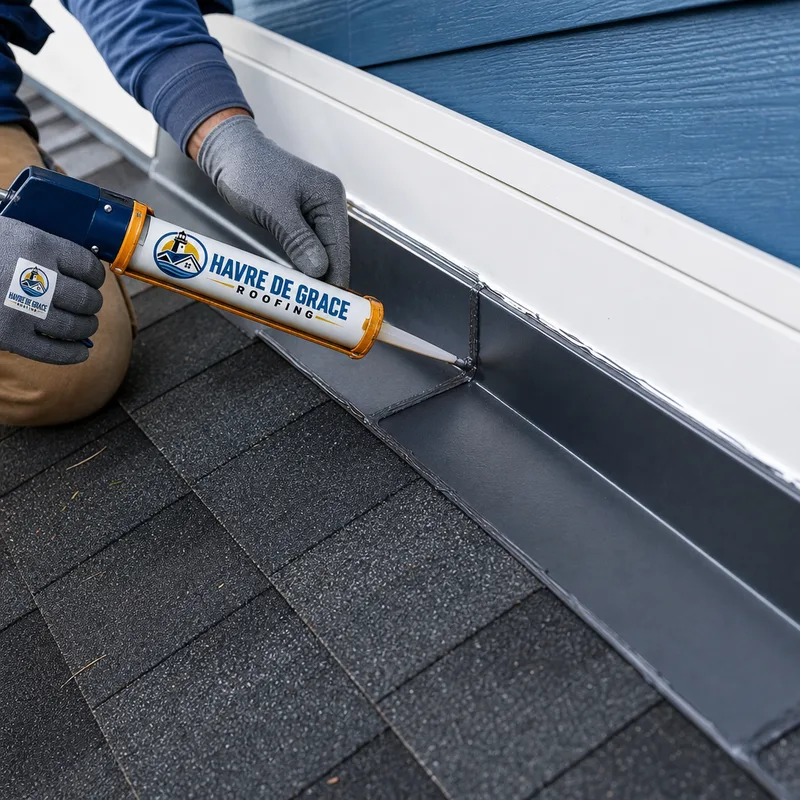
Chimneys, walls, skylights, and step flashing are frequent culprits. We repair or replace corroded metal, failed sealant joints, and loose counterflashing.
Missing tabs, creased shingles from wind, granule loss, and exposed nail heads get corrected with matching materials and proper fastening and sealing.
Cracked rubber collars, loose vent bases, and poorly sealed fasteners can leak for months. We replace worn components and re-flash as needed.
Valleys concentrate water flow. We repair open or closed valley details, replace damaged shingles, and address underlayment breakdown at edges and seams.
Ponding areas, split seams, and edge terminations on modified bitumen or membrane roofs need targeted patches and detail repairs, not just surface coating.
A good roof repair starts with confirming the roof type, age-related wear, and the most likely water paths. We inspect the field of the roof and the details that fail most often: penetrations, sidewalls, valleys, drip edges, and any prior repair areas.
You will get a written scope that separates immediate leak-stopping work from recommended follow-ups. For example, a leak may be fixed by replacing a pipe boot and re-sealing a few exposed fasteners, while a nearby area with deteriorated flashing may be flagged as the next priority.
We also look for conditions that can mimic a roof leak, such as condensation around bathroom fans or poorly terminated vent ducts. If the roof is not the source, we will tell you plainly so you can fix the right problem.
If you are still choosing a contractor, the roofer in Havre de Grace you hire should be able to explain the repair detail they plan to use, not just promise to “patch it.”
If water is actively entering, we prioritize stopping intrusion first, then plan the permanent repair. We will ask where you see staining and when it happens—heavy rain, wind, or ice melt.
We inspect exterior details and, when helpful, check attic conditions near the suspected area for wet decking, mold risk, or venting issues that change the repair approach.
You get a clear description of what will be repaired, the materials involved, and what conditions could expand the scope once the area is opened.
We replace damaged components rather than relying on surface caulk alone, using properly layered flashing, appropriate fastener sealing, and compatible materials.
We police the ground for debris and re-check the repair area. If interior staining needs time to dry before patching or painting, we explain what to watch for.
Most roof repair in Havre de Grace typically ranges from $250 to $1,200 for smaller repairs like replacing a few shingles, a pipe boot, or resealing a flashing detail. More involved repairs, such as repairing a valley, replacing sections of flashing at a chimney, or addressing localized decking damage, often run $1,200 to $3,500+.
Your final price depends on roof type and pitch, how hard the area is to access, how much material must be removed to reach the failure point, and whether damaged sheathing or rotten fascia is uncovered. Exact pricing is confirmed after an on-roof assessment and a written scope.
See how damaged shingles, failed pipe boots, and vulnerable flashing details are identified and corrected.
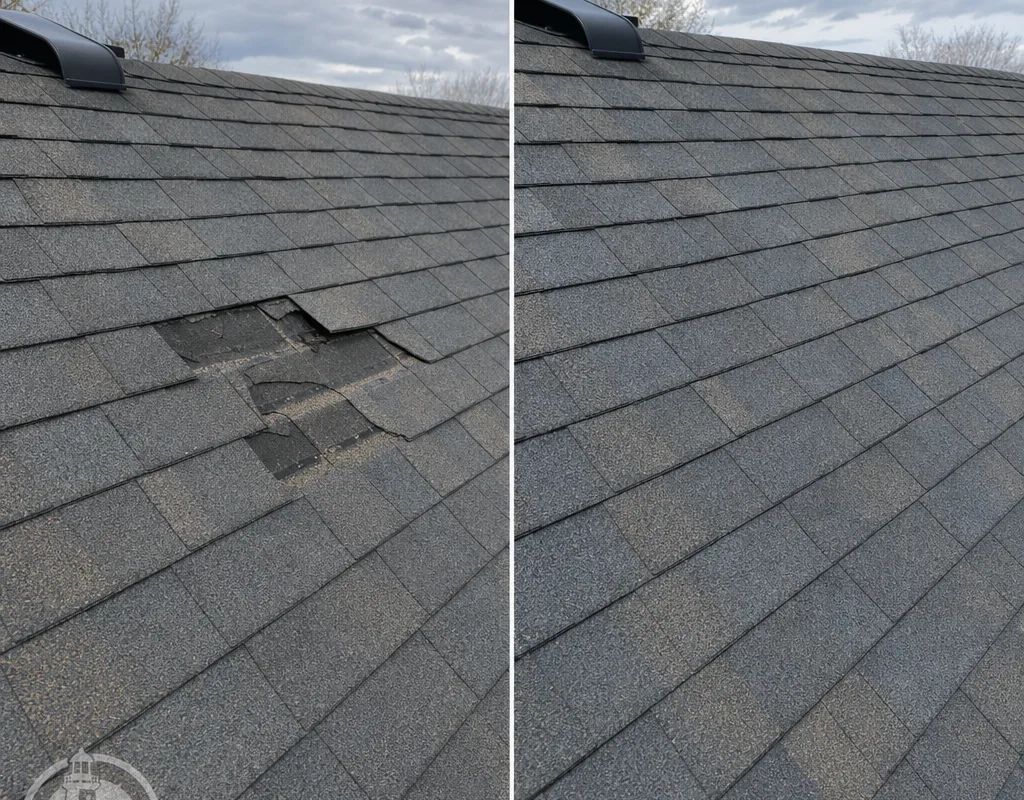
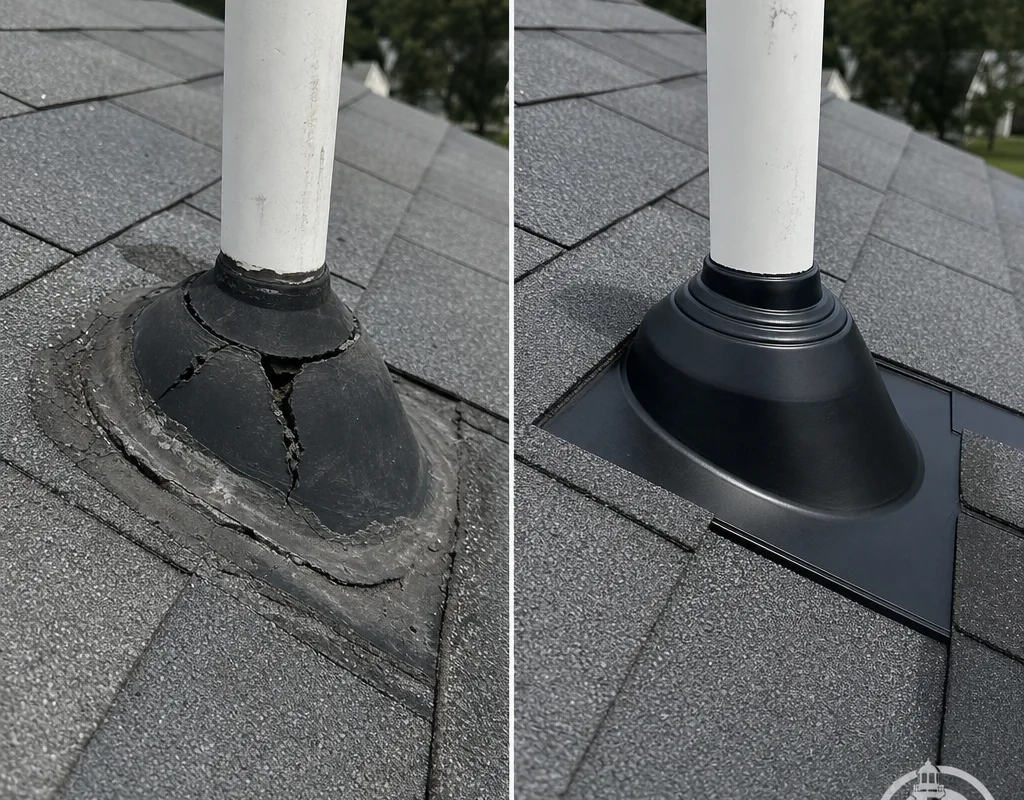
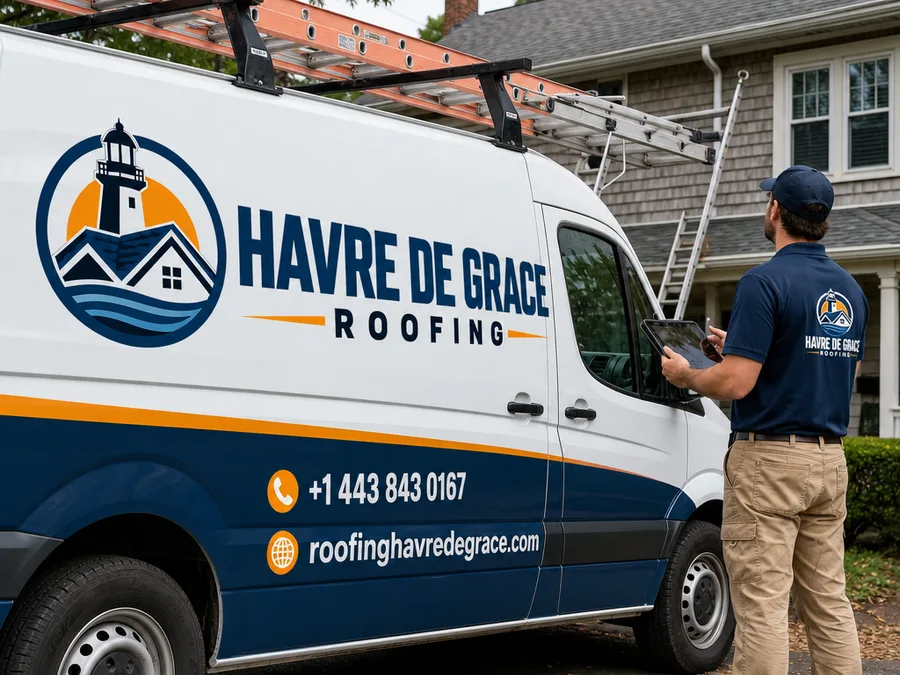
For active leaks, we prioritize the earliest available visit and focus first on stopping water intrusion, then completing the permanent repair plan. Timing depends on weather and current demand, but leak triage typically means addressing the highest-risk openings first—flashing gaps, missing shingles, and failed pipe boots—before secondary items.
No, the leak source is often several feet away because water can travel along the roof deck, rafters, or insulation before it shows up on drywall. That is why we inspect common entry points like flashing transitions, penetrations, valleys, and ridge details instead of only working above the interior stain.
Yes, chimney and wall flashing repairs are a core part of roof repair, and they are one of the most common leak sources on shingle roofs. We evaluate step flashing, counterflashing, and sealant joints, then repair or replace components so the detail sheds water correctly rather than relying on a surface patch.
Yes, if the surrounding shingles are still in serviceable condition and the damage is localized, replacing a small section is often the right fix. We check for brittle shingles, widespread granule loss, and repeated prior repairs; if those are present, we explain when repair is likely to be temporary.
Move valuables away from the leak area, place a container to catch drips, and avoid climbing onto the roof, especially when it is wet or windy. If you can safely access the attic, look for active dripping and wet insulation so you can limit interior damage, but leave roof access and temporary coverings to a trained crew.
Yes, we repair wind-lifted or missing shingles and the secondary leak points storms create, such as loosened flashing and exposed fasteners. After a wind event, we also check ridge caps, valleys, and penetrations because damage there can be subtle but still allow water entry.
Tell us what you are seeing and when it happens, and we will schedule a roof assessment, identify the likely entry point, and provide a written scope for roof repair in Havre de Grace.